
The 7 Biggest Mistakes You Make When Baking Potatoes
Discover how to never miss baking your potatoes again!

Baked potatoes are a top choice for comfort food. A soft, mouth-melting interior and a crispy, salty skin, what more could you ask for?
But for many people, the dream of the perfect baked potato is just out of reach. What should seem simple can yield mixed results: gummy centers, slightly charred or slippery skins, soggy skins.
It’s not inedible, but can it be better?
Yes.
The steps to improve them are very easy, so there’s no longer any reason to settle for sad and shriveled baked potatoes.
Read the following to find out if you’re committing the 7 deadly sins against baked potatoes, and discover simple tips you can follow to make your next baked potatoes perfect!
1. Not drying the potatoes well
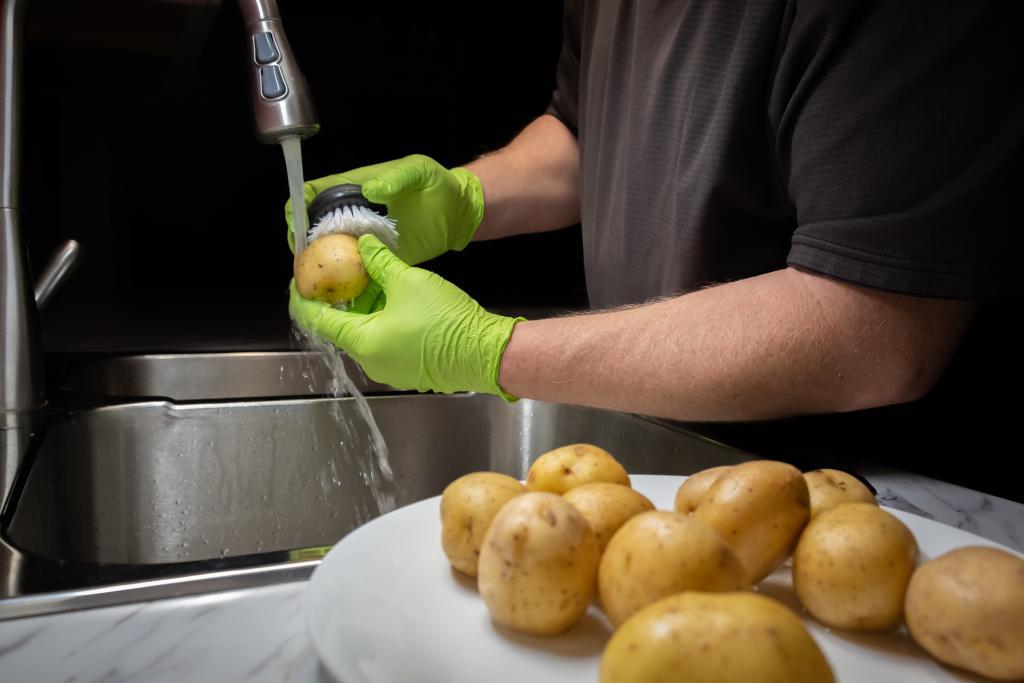
You're probably rinsing the potatoes to remove any dirt and debris. Maybe you quickly scrub them with a vegetable brush too. But you may not be drying the potatoes after their bath.
Excess moisture on the skin can seep into the potato during cooking and cause soggy peels.
Be sure to pierce a few holes in the skin of the potatoes, even though they are unlikely to explode in the oven, no one wants to take risks with dinner. Be cautious.
2. Wrapping the potatoes in aluminum foil
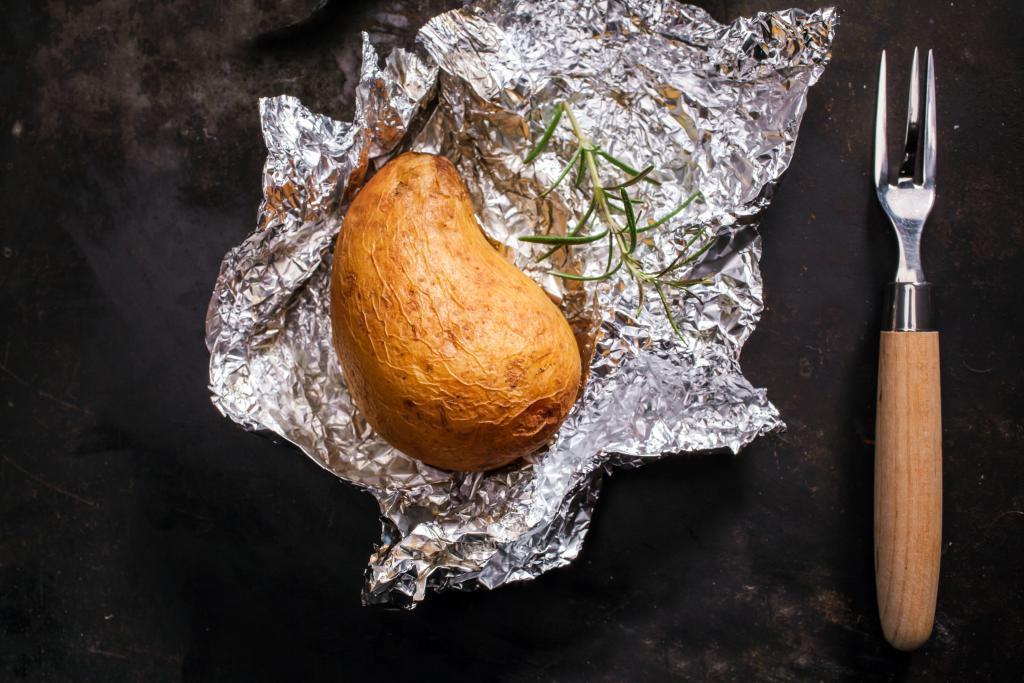
Don’t be ashamed if you do this - many cooks think it’s the key to perfect baked potatoes. But it turns out you’re ruining the skin in doing so.
The skin of the ideal baked potato relies on a certain amount of dehydration and rehydration. If you cook it in aluminum foil, all the moisture from the potato returns into its skin, which can lead to a disappointing result.
Once you’ve washed and dried the potatoes, leave them “all naked.” No wrapping.

3. Not using a rack under the potatoes
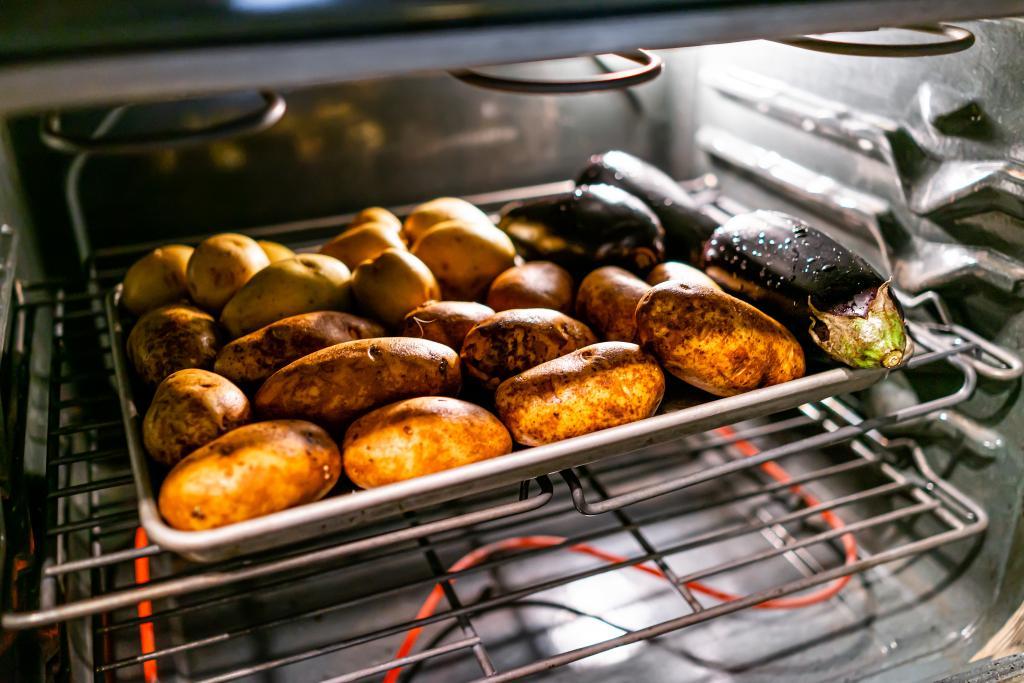
The potatoes need to cook throughout the process, and the best way to achieve this is to ensure hot air can reach the potato from all sides. If a potato cooks with one side touching a baking sheet, you'll get a hard spot and possibly uneven cooking.
Place a thin rack inside a rimmed baking sheet. Line your potatoes side by side and place the pan in the oven. Make sure there is a little space between each potato before closing the oven door.
4. An oven that’s too hot
Low and slow is the mantra of the perfect baked potato! If you have free time, bake the potatoes at 300°F for 90 minutes. If you need to speed it up, bake them at 450°F for 45 minutes. (Note: cooking time varies depending on your potato's size and your oven's operating temperature.)
But don’t go hotter than that. There are no good results with baking potatoes at a temperature above 450°F. High heat will leave you with overly browned skins that could even char in places. And since the point of a perfectly baked potato is to have skins as delightful as the soft interior, no charring is allowed!
5. Not taking the potatoes' temperature
You know when meat is perfectly cooked by measuring the internal temperature; the same goes for baked potatoes. Use a probe thermometer to measure your potatoes' temperature. You’re aiming for a temperature between 205°F and 212°F. Below, the texture may still be too dense, and above, it can become a gummy mess.
6. Basting first, not last.
Avoid rubbing your potatoes in oil and salt until the end of cooking. That’s when they will offer the most texture and flavor benefits to the potatoes. If you oil them early, the skins might not crispen. The salt may also drip off the potatoes in the heat.
Instead, do a quick basting with oil after the potatoes have reached 205°F.
Remove the pan from the oven. Brush with olive oil (or bacon grease if you have any) and a fine pinch of kosher salt.
Return the dish to the oven for 10 minutes - the potatoes' temperature won’t climb more than 2 or 3 degrees during this period.
7. Letting the potatoes cool before cutting them
Unlike meat, potatoes don’t improve by resting. They should be opened immediately. Otherwise, they will retain water from the still-steaming center and become dense and gummy.
Quickly place a serrated knife in each potato as soon as the pan is out of the oven. Give them a slight pressure (with a glove or a hot cloth) to create a vent.
Then you can call the family to the table. The potatoes will have cooled just enough by the time everyone gathers to enjoy the meal and admire your perfectly baked potatoes.
Newsletter
Get the latest news and updates directly in your inbox.

Your source of inspiration and practical advice for bringing all your DIY projects to life.
© 2026 Attraction Web S.E.C. All rights reserved.
k28dh